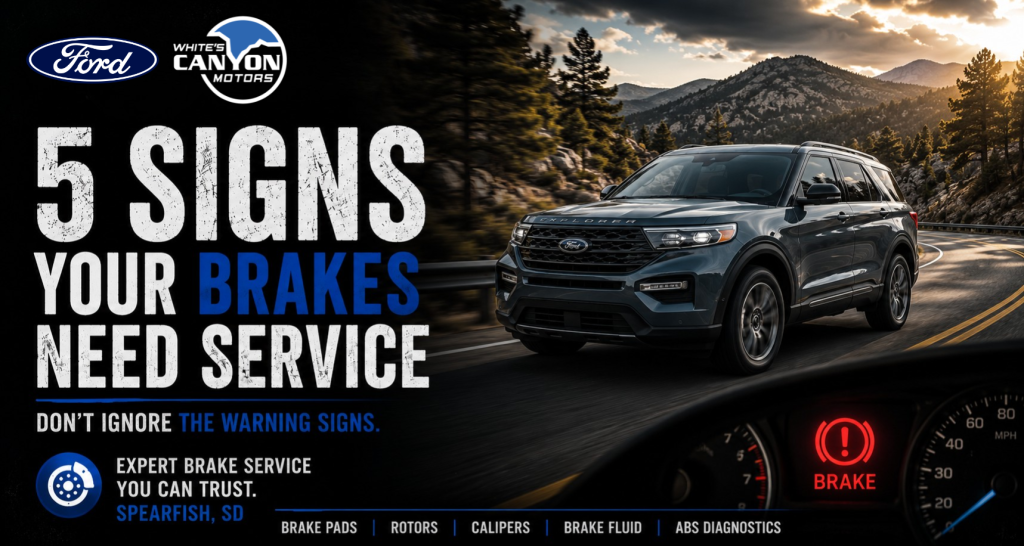
When it comes to vehicle safety, few systems are as important as your brakes. When something feels “off,” it is worth paying attention. Whether you are commuting through Spearfish, heading toward Rapid City, driving in the hills near Sturgis, or making the trip from Belle Fourche or Gillette, dependable brakes matter every mile of the way. At White’s Canyon Ford & Lincoln in Spearfish, SD, our service team can inspect your braking system and help determine whether your vehicle needs brake pads, rotor service, brake fluid service, caliper repair, ABS diagnostics, or a complete brake inspection. Here are five common signs it may be time to schedule brake service. 1. Your Brakes Are Squealing or Grinding A high-pitched squeal when braking is often one of the first signs that your brake pads may be wearing down. Many brake pads have built-in wear indicators that produce noise as the pad material wears down. Grinding is more serious and may mean the pads are worn enough that metal components are making contact. Ignoring these sounds can lead to bigger repair costs, including possible damage to your rotors. If your vehicle squeals, scrapes, or grinds when you stop, it is best to have your brakes inspected sooner rather than later. 2. You Feel Vibration When Braking If you notice vibration in the brake pedal or steering wheel when slowing down, your rotors may be uneven, warped, or worn. This can happen over time from heat, heavy braking, mountain driving, or regular wear and tear. Rotor issues can affect how smoothly and confidently your vehicle stops. Depending on the condition of your braking system, your vehicle may need rotor resurfacing or rotor replacement. 3. The Brake Pedal Feels Soft or Spongy If your brake pedal feels soft, spongy, or lower than normal, it can be a warning sign of brake fluid issues, air in the brake lines, or another hydraulic system concern. Because your brakes rely on proper pressure to stop the vehicle, changes in pedal feel should not be ignored. If your pedal feels different than usual, schedule a brake inspection right away. 4. Your Vehicle Pulls to One Side When Stopping If your vehicle pulls to one side when you brake, it may be a sign of uneven brake pad wear, a sticking caliper, contaminated brake fluid, or another problem within the braking system. This can affect both braking performance and vehicle control, especially on wet roads, gravel, snow, or uneven Black Hills terrain. 5. Your Brake Warning Light or ABS Light Is On Your brake warning light or ABS light is your vehicle’s way of telling you something needs attention. It may be related to low brake fluid, worn components, ABS system issues, or another concern that requires proper diagnostics. White’s Canyon Ford & Lincoln offers brake inspections and ABS diagnostics to help identify the issue and recommend the right repair. Why Brake Service Matters in the Black Hills Driving conditions around Spearfish can be hard on brakes. Hills, changing weather, towing, stop-and-go traffic, gravel roads, and winter conditions can all add wear to your braking system. Regular brake inspections can help catch small issues before they turn into bigger problems. Most brake pads last somewhere around 30,000 to 70,000 miles. Their lifespan can vary widely based on your driving habits, vehicle type, and road conditions, making regular inspections an important part of routine maintenance. Ford owners can find additional maintenance information through Ford Owner Resources. Schedule Brake Repair in Spearfish, SD Whether you drive a Ford F-150, Explorer, Bronco Sport, Maverick, or any make or model, our service team is here to help keep your vehicle stopping safely. At White’s Canyon Ford & Lincoln, our brake services include: Brake pad replacement Rotor resurfacing or replacement Brake caliper repair Brake fluid flushes ABS diagnostics Complete brake inspections If you are hearing noises, feeling vibration, noticing a soft brake pedal, or seeing a warning light, schedule your brake inspection with White’s Canyon Ford & Lincoln in Spearfish, SD. Serving Spearfish, Rapid City, Sturgis, Belle Fourche, Gillette, and the surrounding Black Hills area.
The History of the Ford Bronco
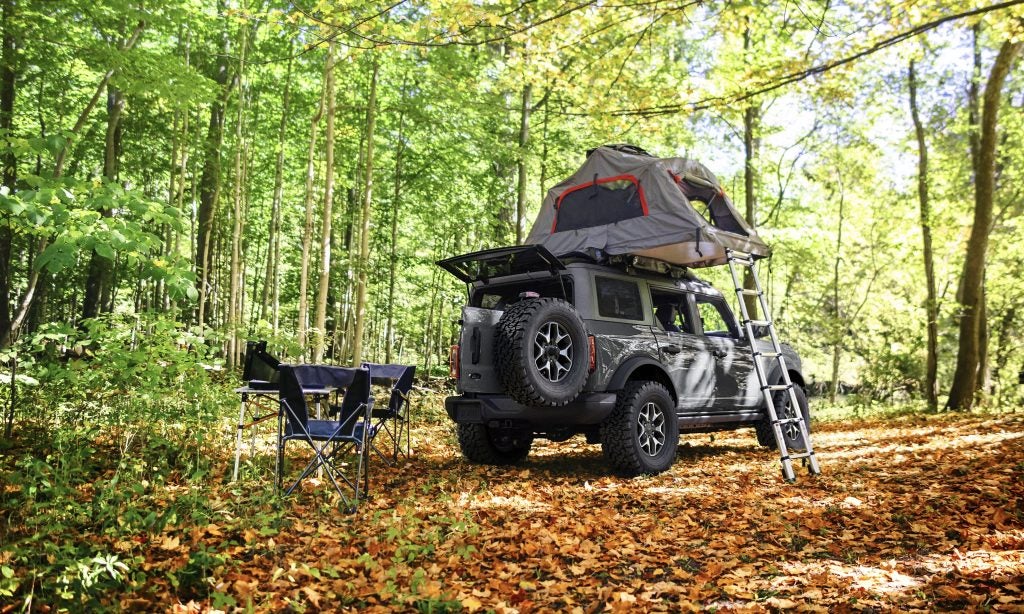
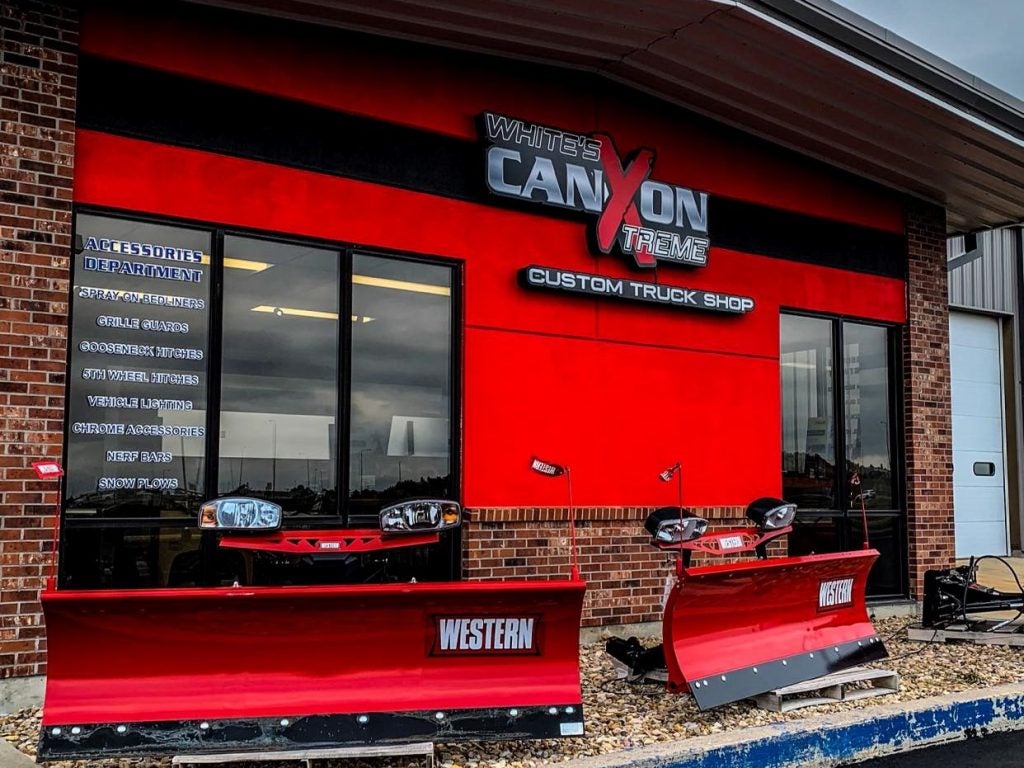
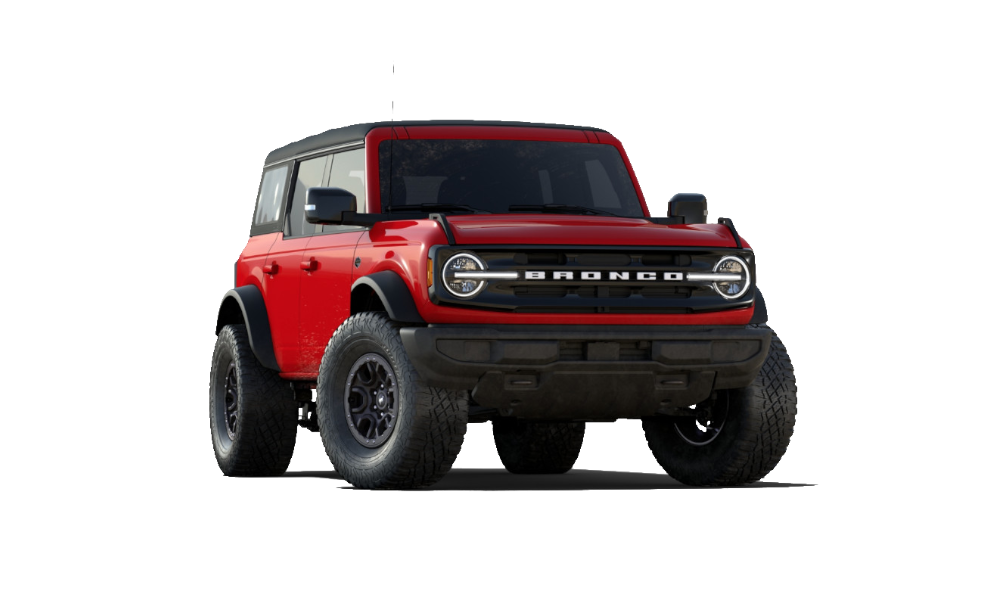
Let’s take a deep dive into the history of the Ford Bronco shall we? The Bronco was released in August of 1965, and was off to a middling start. The competition in the market around the small body, short wheelbase Sport Utility Vehicle was steep in the early days. It slowly grew in popularity after the first few early adopters got their cars out on the road. In the same time period, the world also found that the Bronco had a great capacity for racing. Specifically the Baja 1000. Many off-road racing fans know “Big-Oly” the heavily modified 1969 Bronco that won the Baja outright a couple of times. However fewer people know that there were actually attempts to run the grueling race with an unmodified Bronco in the early years as well. Ford even produced a special edition of the Bronco inspired by the designs of one such racer’s vehicle the 2025 Stroppe edition an orange-tone red, and white paint scheme with a black hood and blue roof. On the topic of special editions, there is a newly announced Bronco RTR (Ready To Rock), a partnership that Ford made with drift racer, and off-road racer Vaughn Gittin Jr. His racing Bronco, lovingly nicknamed “Brocky” which he ran in 2018; just one of his many appearances over the course of consistent appearances stretching back to 2016. The Bronco, across nearly all its variations has been a successful platform in motorsport. Throughout the generations of Bronco, whether it be the 1965 to 1998 original run of the Bronco, or the modern 2021 to current run, one near constant feature of the Bronco would be that of having two different models available. The Bronco, and the Bronco II in the classic generations, and the Bronco, and Bronco Sport respectively. The Bronco II was added to the Ford vehicle lineup in 1984 as some purchasers wanted a Bronco in a smaller platform more befitting the original vehicle. The Bronco had grown, substantially, over the years. From a small yet capable SUV, to, in its main trim the Bronco was now measurably heavier, wider, longer, and taller. In fact, the Bronco was substantially taller, wider, and longer than its partner in the lineup, the Ford Explorer. While the modern Bronco, and Bronco Sport are somewhat a mirror to this dichotomy, the Bronco Sport is tuned more for city and highway travel, it is still capable of off-road travel. The Sport’s big brother, in a sense, is made, and is completely capable of just about any trail you could throw at it. All with minor to no modification required. In fact, the same Baja 1000 race has seen many basically stock (required safety modifications only) modern Broncos being run as a form of testing to make the vehicle more ready, and capable for your own pleasure. There are really two pillars of the Bronco that have kept it both successful, and relevant in the market all these years. The removable roof, giving people the option of a vehicle closer to a pickup when needed, and the comfortability of an SUV when desired. The other? Mod-ability. Modifications have always been readily available for the Bronco. From the original release, and the stock straight six-cylinder being swapped out for a high-output 289 c.i. V8, removable door and roof kits and options, and a myriad of other options both factory, and aftermarket. While the removable roof is not an option currently available on the modern Bronco Sport, the full-size Bronco fully embodies both of those primary tenets. The Ford aftermarket catalog for the Bronco boasts many pages of modifications and at least 3 different options for roof coverings. Even the Bronco sport has many modification options available including roof racks, and front-end bumper impact bars. If you have a Bronco and are interested in joining in the modified Bronco movement give our White’s Canyon Xtreme Truck Shop a visit and we’ll see what we can do for you!