The Lincoln Way App: What Is It?

Lincoln Way is a free app that seamlessly connects you with your vehicle and revitalizes your ownership experience. Above all, it allows you to focus your time and energy on what matters most in life.
Lincoln dedicates itself to providing a unique and effortless ownership experience. Their primary goal is to preserve one of life’s most lavish luxuries – your time. Therefore, they created the Lincoln Way App. Members can conveniently access account information, make payments, adjust preferences, and more.
Lincoln Connect
Lincoln Connect is a special modem embedded into your vehicle, thus allowing remote control from the palm of your hand. All remote features of the app are complementary, which includes:
- Remote start/stop
- Remote lock/unlock
- Vehicle location
- Scheduled start
Lincoln Connect also allows customers to enable and manage a Wi-Fi hotspot, available through AT&T. If you’re unsure whether a hotspot is right for you, a free trial is available for up to three months or 3GB of usage, whichever comes first.
Phone As A Key
With the Lincoln Way App, you can use Phone As A Key, which turns your phone into a virtual key. You will have effortless access to your vehicle, even if you leave your traditional key fob at home. As long as your smartphone is with you, you can lock, unlock, or remotely start your vehicle. This feature is only available on select 2020 and newer models.
Lincoln Technology
Seamlessly connect to your vehicle’s health reports, which reveal diagnostic, maintenance, recall information and recommended maintenance actions. You can also check your maintenance history or schedule a future service appointment! Meanwhile, stay informed of the status of your service with convenient texts or emails.
Roadside Assistance
Complimentary 24/7 roadside assistance is available for Lincoln vehicles under warranty. If your warranty expires, you may still utilize roadside assistance, but additional fees will incur. Through the app, you will have access to:
- Towing to your preferred Lincoln Dealer
- Battery jumpstarts
- Flat tire change
- Winch out
- Fuel delivery
For serious emergencies, please call 911 immediately.
Lincoln Access Rewards
Lincoln offers rewarding ownership through their loyalty program, Lincoln Access Rewards. Members can earn Lincoln Access Reward Points by spending money at our dealership and engaging in Lincoln services. You can redeem points toward future purchases – maintenance, service, or a new vehicle, for example. As a member, you will be the first to know of special announcements, such as program expansions or exclusive offers. Your rewards dashboard will also provide vehicle and future reward recommendations catered to your preferences.
Lincoln Concierge
Lincoln Concierge is a 24/7 personal connection to a team of Lincoln experts via chat or phone. They are dedicated to providing a hassle-free experience and will consequently be your guide on benefits, services, and Lincoln vehicles.
Ready To Sign Up?
Firstly, download the Lincoln Way app from the App Store (iOS) or Google Play Store (Android) and follow the prompts to sign up. Then, create a PIN and activate your vehicle using Lincoln Connect. That’s it! You will set off on a smoother path – behind the wheel and out in the world.
Need help? Stop into the dealership! One of our expert sales professionals will be ready to help.
Ford BlueCruise: The Future of Hands-Free Driving

Ford is at the forefront with its BlueCruise system in today’s fast-changing world of automotive technology. BlueCruise blends cutting-edge features with Ford’s commitment to safety and performance, successfully representing the future of driving convenience. But what exactly is BlueCruise, and how does it impact the driving experience? Let’s explore.
What is Ford BlueCruise?
Ford BlueCruise is a hands-free highway driving system designed to make long drives more comfortable and less stressful. It builds upon the foundation laid by Ford’s existing driver assistance systems, such as Ford Co-Pilot360™ Technology and Adaptive Cruise Control with Stop-and-Go.
Unlike traditional or adaptive cruise control, which adjusts speed based on traffic conditions, BlueCruise allows drivers to remove their hands from the wheel. At the same time, the vehicle navigates pre-mapped, compatible highways using advanced cameras, sensors, and radar that monitor the road, traffic, and surrounding environment.
How Does BlueCruise Work?
Ford integrates BlueCruise into vehicles equipped with the Ford Co-Pilot360™ Active 2.0 Prep Package. Here’s how the system works:
- Hands-Free Driving on “Blue Zones”: BlueCruise operates on pre-mapped stretches of highway known as “Blue Zones,” covering over 130,000 miles of North American roads. You must be in a Blue Zone to utilize BlueCruise. Check the current Blue Zone map here.
- Seamless Integration with Adaptive Cruise Control: BlueCruise enhances Ford’s existing adaptive cruise control, providing lane centering, traffic sign recognition, and automatic speed adjustments to maintain a safe following distance. It gives the vehicle a more intuitive driving experience, adapting to changing conditions on the road.
- Driver Monitoring System (DMS): One of the key safety features of BlueCruise is the Driver Monitoring System. It uses infrared sensors that track head position and eye movement to ensure drivers remain attentive, even when the vehicle is in hands-free mode.
- Over-the-Air Updates: BlueCruise benefits from continuous improvements, similar to many modern technologies. Ford delivers new features and refinements through over-the-air updates, keeping your vehicle up with the latest advancements.
Why is BlueCruise Important?
Ford BlueCruise isn’t just about convenience—it’s a significant step toward safer driving. By allowing drivers to take their hands off the wheel, it helps reduce fatigue. Additionally, the DMS makes sure you still pay attention, combining comfort with a high safety standard. Ford’s approach keeps the driver engaged in a way that encourages confidence in the vehicle’s technology without giving up total control. As a result, this allows for a more relaxed and secure driving experience, especially during long road trips.
BlueCruise Availability
Ford BlueCruise is available in select Ford models, including the Ford Expedition and the Ford F-150. Vehicles equipped with the Ford Co-Pilot360™ Active 2.0 Prep Package are ready for BlueCruise activation via a software update. Drivers can enjoy hands-free driving as soon as the feature is unlocked.
The Future of Ford BlueCruise
In conclusion, BlueCruise marks the beginning of Ford’s journey toward more advanced driving technologies. As more highways become mapped and the system continues to evolve, we can expect even more seamless, safe, and convenient hands-free driving experiences. BlueCruise is shaping the future of Ford vehicles, making road trips more enjoyable and daily commutes less stressful. The future of driving is within reach—and it’s closer than you might think.
At White’s Canyon Ford, we’re excited to offer the latest Ford technologies, including BlueCruise. Stop by our dealership to learn more; test drive a Ford vehicle equipped with BlueCruise and experience hands-free driving for yourself!
Dashboard Warning Lights: What Do They Mean?

Dashboard warning lights can be alarming and confusing. However, they are crucial in alerting you of potential vehicle problems. Understanding what each light means can help you address issues promptly and keep your car running smoothly. With this in mind, let’s decipher the meanings behind some of the most common dashboard warning lights.
Check Engine Light

The check engine light (engine-shaped icon) is one of the most recognizable warning lights. It indicates a wide range of issues, ranging from minor to severe. Common causes include problems with the emission control system, fuel system, or ignition system, for example. While a solid check engine light may indicate a non-urgent issue, a flashing light typically signifies a more severe problem that requires immediate attention.
Battery Light

The battery light (battery-shaped icon) communicates a problem with your charging system. It could mean that the battery is not charging correctly. A damaged alternator, loose or corroded battery connections, or a broken drive belt may be to blame. Ignoring this warning light could result in a dead battery and an inability to start your car.
Oil Pressure Light

The oil pressure light (oil can symbol) alerts you to low oil pressure in your engine. Low oil pressure may cause inadequate lubrication, leading to excessive wear and engine damage as a result. Cease driving immediately and check the oil level. Driving with low oil pressure can be extremely harmful to your vehicle.
Brake System/ABS Lights

The brake system light (an exclamation point inside a circle or the word “BRAKE”) or ABS light (the letters “ABS” inside a circle) indicates a problem with your vehicle’s braking system, such as low brake fluid, worn brake pads, or an anti-lock braking system (ABS) malfunction.
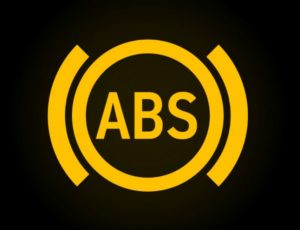
Your ABS system helps prevent your wheels from locking up during braking, improving vehicle control. Ignoring this warning light could compromise your ability to stop safely, so inspecting your braking system as soon as possible is crucial.
Tire Pressure Monitoring System (TPMS) Light

The TPMS light (an exclamation point inside a tire) alerts you to low tire pressure in one or more of your tires. Driving with low tire pressure can impact your vehicle’s handling, fuel efficiency, and tire wear. Check your tire pressure as soon as possible and inflate them to the recommended level if needed.
Airbag Light

The airbag light (a person with an inflated airbag) indicates a problem with your vehicle’s supplemental restraint system (SRS). Consequently, one or more airbags might not deploy correctly in a collision. It is very important to have a qualified mechanic inspect your vehicle to identify and resolve the problem.
Engine Temperature Warning Light
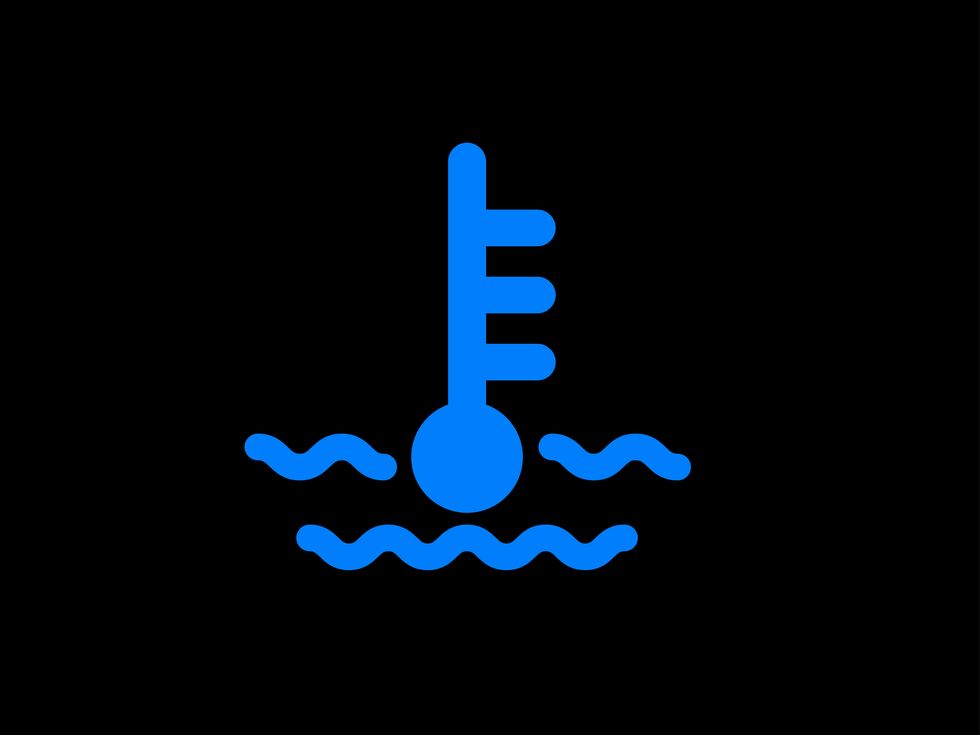
The engine temperature warning light (thermometer floating in liquid) alerts you to an overheating engine. If ignored, overheating can result in significant engine damage. It is essential to pull over promptly and let your engine cool down before examining coolant levels and searching for leaks.
Transmission Temperature Warning Light

The transmission temperature warning light (thermometer next to a gear symbol) alerts you to high transmission fluid temperatures. Overheating transmission fluid can lead to transmission damage and failure. Stop your vehicle and allow the transmission to cool down, then check transmission fluid levels and look for leaks.
Fuel Warning Light
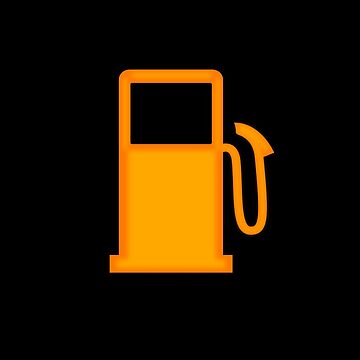
The fuel warning light (gas pump symbol) indicates that your vehicle is running low on fuel. Running out of fuel can leave you stranded or damage your fuel pump, so it’s essential to refuel as soon as possible after the warning light comes on.
Electronic Stability Control (ESC) Light

The ESC light (an exclamation point in a triangle with a circular arrow around it or a car with wavy lines beneath it) indicates a problem with your vehicle’s electronic stability control system.

This system helps maintain vehicle stability and prevent skidding during sudden maneuvers. If the ESC light comes on, have your car inspected to ensure proper functionality.
Traction Control Light
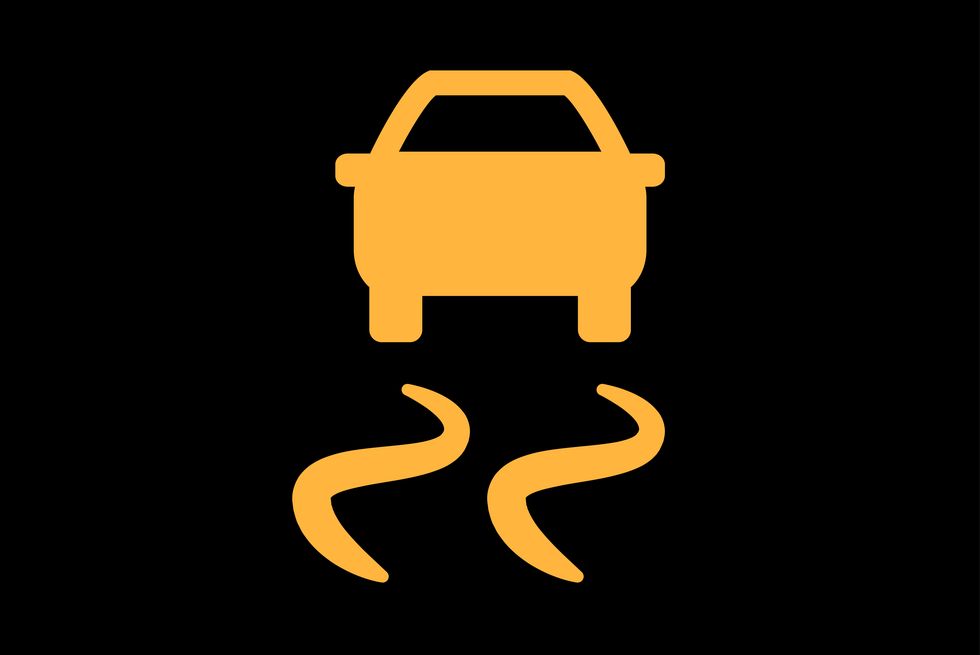
The traction control light (car with wavy lines beneath it or a picture of a tire with “TC” in it and a line through it) indicates a problem with your vehicle’s traction control system, which helps prevent wheel spin during acceleration on slippery surfaces.

If the traction control light comes on, have your vehicle inspected for optimal traction control performance.
Glow Plug Indicator (Diesel Engines)

The glow plug indicator (coil symbol) is specific to diesel engines and indicates that the glow plugs are preheating the combustion chambers for easier starting. If the glow plug indicator stays on for an extended period or flashes, it may indicate a problem with the glow plug system that requires attention.
White’s Canyon Ford is Here For You
In conclusion, dashboard warning lights are your car’s way of communicating with you and alerting you to potential problems. They are necessary to avoid more severe problems and costly repairs later. By understanding what different dashboard warning lights mean and taking prompt action when they appear, you can help ensure your safety and maintain the health of your vehicle. If you need help with the meaning of a dashboard warning light, consult your vehicle’s owner’s manual or even more, contact our service department. Our team of qualified mechanics and advisors is ready to help. Drive safely!
For a more comprehensive guide to warning lights, click here.
Why White’s Canyon?
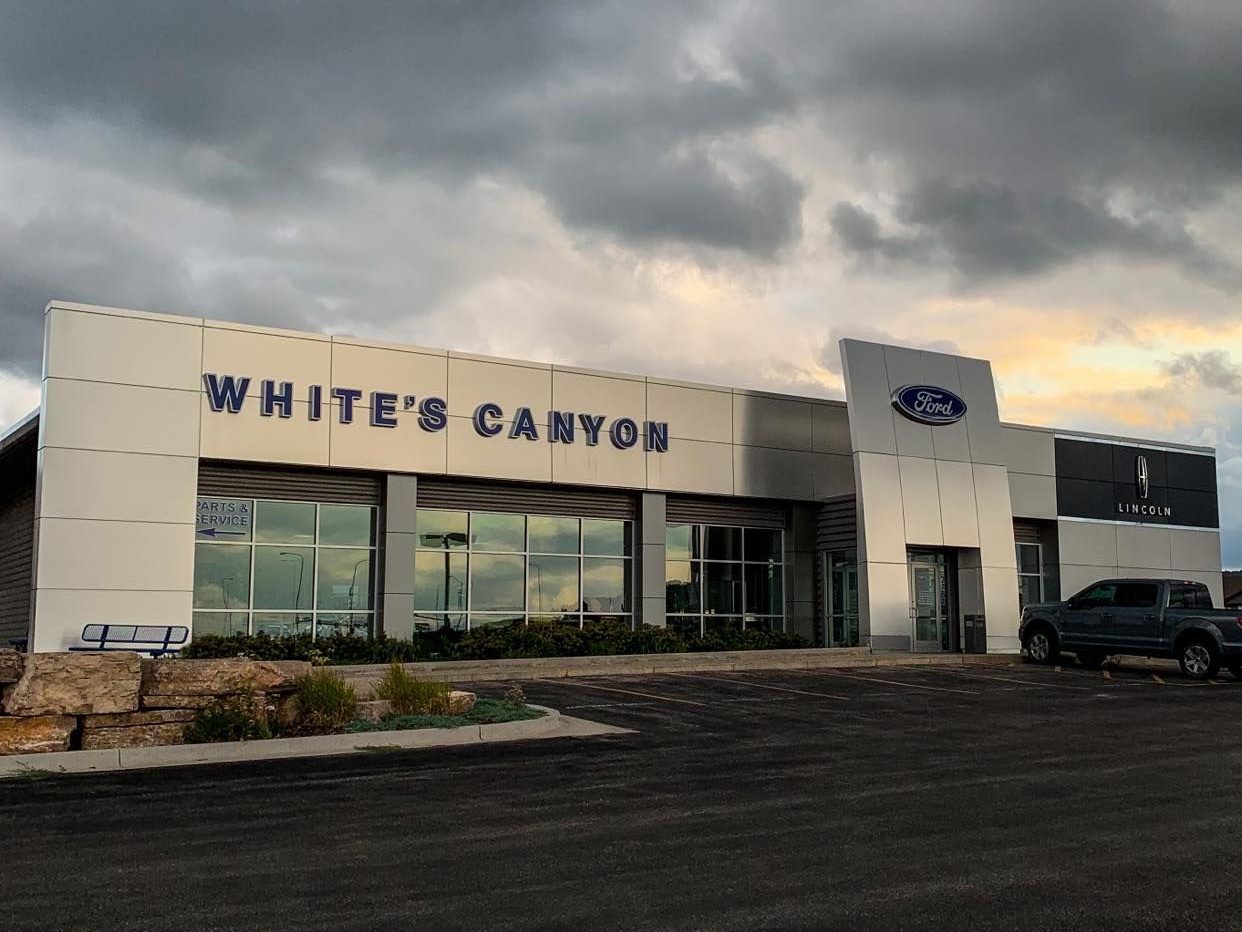
Come see the difference at White’s Canyon Ford, where every mile matters.
When it comes to purchasing a new or used vehicle, choosing the right dealership is crucial. You want a dealership that not only offers a wide selection of high-quality vehicles but also provides exceptional customer service and support. We take pride in being your go-to destination for all your automotive needs. Here’s why you should choose White’s Canyon:
Extensive Inventory
At White’s Canyon Ford, we have a diverse range of vehicles to suit every need and budget. Whether you’re looking for a reliable family SUV, a rugged truck, or a fuel-efficient sedan, our inventory has you covered. Our websites, whitescanyonford.com and whitescanyonlincoln.com, allow you to browse our extensive selection online, making it easy to find the right vehicle.
Competitive Pricing and Financing Options
We understand that buying a vehicle is a significant financial commitment; therefore, we offer competitive pricing and various financing options to make your purchase more accessible. Our team can work with you to find a financing solution for your budget and lifestyle.
Exceptional Customer Service
At White’s Canyon Ford, we dedicate ourselves to providing top-notch customer service. As a result, we’re here to assist you throughout the entire car-buying process. Our knowledgeable staff can answer your questions, provide guidance, and ensure a smooth and stress-free experience.
Expert Maintenance and Service
Our commitment to our customers goes beyond the initial purchase. Our state-of-the-art service center is staffed with experienced technicians who can keep your vehicle running smoothly. From routine maintenance to more extensive repairs, look no further.
Community Involvement
We take pride in being an active part of our community. White’s Canyon Ford enjoys giving back and supporting local initiatives. When you choose us, you’re not just getting a vehicle but also supporting a business that cares about its community.
Positive Reputation
Our reputation speaks for itself. Many satisfied customers have shared their positive experiences with us. You can find testimonials and reviews on our website to see what others say about their interactions with White’s Canyon Ford.
Convenient Location
We’re conveniently located, making it easy for you to visit and explore our dealership. Our friendly staff is ready to assist you in person, and our facilities are designed to provide a comfortable and enjoyable car-buying experience.
In conclusion, White’s Canyon Ford is the dealership of choice for those seeking a reliable, customer-focused, and community-oriented automotive experience. We invite you to visit us at our dealership or through our website to see why so many customers trust us with their automotive needs. Your journey toward your dream vehicle starts here at White’s Canyon Ford.
Leasing a Vehicle: Everything You Need to Know
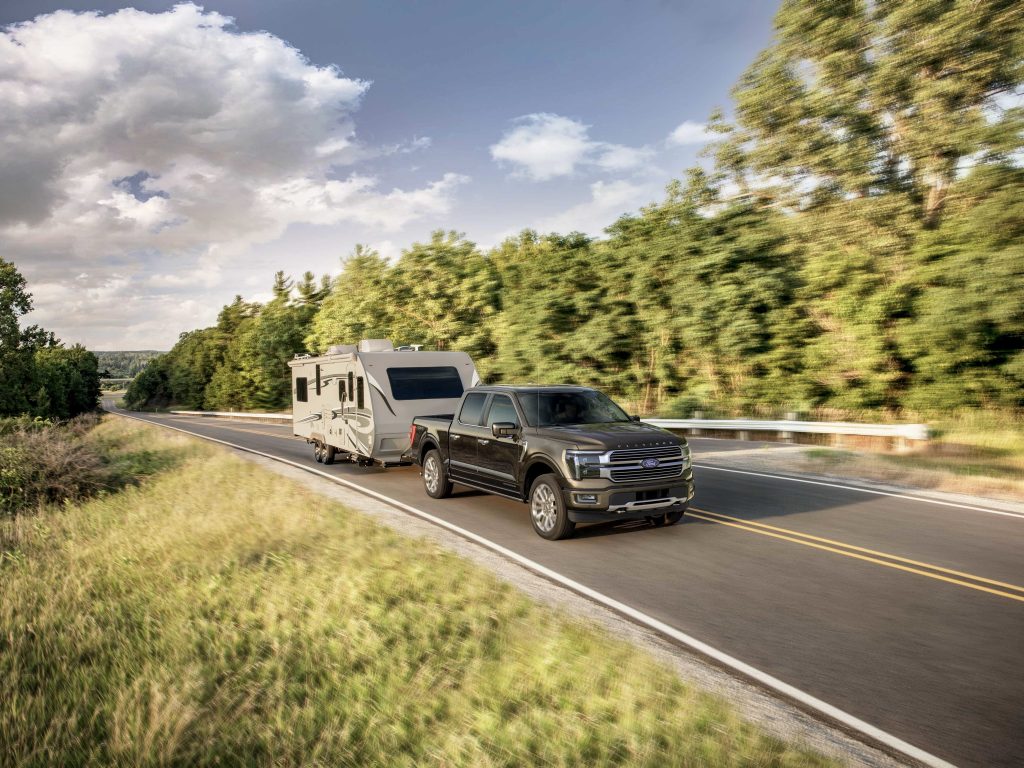
Leasing has become an increasingly popular option for people looking to get behind the wheel of a new car. It offers numerous advantages over traditional car buying, such as lower payments and the ability to drive a new vehicle every few years. Let’s break down the concept of leasing a vehicle and help you decide whether it’s the right choice for you.
What Is Vehicle Leasing?
Vehicle leasing is essentially a rental agreement for a car. Instead of buying the car outright, you agree to make regular monthly payments to the leasing company for the use of the vehicle. Typically, lease terms range from 24 to 36 months, though they can vary.
How Does It Work?
Down Payment: When you lease a vehicle, you’ll often be required to make a down payment. This upfront payment is usually lower than the down payment required for purchasing a car, making leasing more accessible.
Monthly Payments: Your monthly lease payments cover the depreciation of the vehicle’s value during the lease term, as well as any finance charges and taxes. These payments are typically lower than those for an auto loan because you’re only paying for a portion of the car’s value.
Mileage Limit: Leases come with a set mileage limit, typically from 10,000 to 19,000 miles per year. If you exceed this limit, you may incur additional charges at the end of the lease.
Maintenance: You are responsible for maintaining the vehicle per the manufacturer’s recommendations during the lease term. Any excessive wear and tear may result in additional charges when you return the vehicle.
The Benefits of Leasing
Leasing offers several advantages, including:
Lower Monthly Payments: Because you’re not paying for the full cost of the vehicle, your monthly payments are generally lower than if you were to purchase it.
New Cars More Often: Leasing allows you to drive a new car every few years, providing access to the latest features, safety technology, and improved fuel efficiency.
Warranty Coverage: Most leased vehicles are covered by the manufacturer’s warranty for the duration of the lease. This reduces the need for major repair expenses.
Tax Benefits: In some cases, you may be able to deduct a portion of your lease payments if you use the vehicle for business purposes. Consult with a tax professional for details.
Considerations and Drawbacks
While leasing can be an attractive option, there are some important considerations and drawbacks to keep in mind:
Mileage Limits: Exceeding the mileage limit can result in extra charges. It’s crucial to accurately estimate your annual driving needs.
No Ownership: When you lease, you don’t build equity in the vehicle. At the end of the lease term, you have three options: return it with no concerns about inequity, buy it out and keep it (financing options available), or buy it out and trade it in if there is equity remaining.
Fees and Penalties: There may be fees associated with leasing, such as acquisition fees, disposition fees, and charges for excess wear and tear.
Limited Customization: Most leases require you to return the vehicle in its original condition. This limits your ability to customize or modify it.
Is Leasing Right for You?
Deciding whether leasing is the right choice for you depends on your individual circumstances and preferences. Consider the following factors:
Budget: Leasing often offers lower monthly payments, making it more budget-friendly for some. However, buying may be a better choice if you’re looking to build equity and eventually own a car outright.
Driving Habits: If you have a long daily commute or frequently take road trips, a lease with mileage limits may not be the best fit.
Desire for New Features: If you love having the latest technology and features, leasing allows you to upgrade to a new car more frequently.
Leasing can be an attractive option for those looking to enjoy the benefits of driving a new car without the long-term commitment of ownership. However, it’s essential to carefully weigh the pros and cons. Consider your driving habits and budget, and read the lease agreement thoroughly before deciding.
Whether you lease or buy, understanding your options is the first step toward finding the perfect vehicle for your needs. Our expert team of sales professionals is ready to answer any questions you may have. They will guide you through a quick and easy experience! Give us a call today!
What is a Ford Multi-Point Inspection?
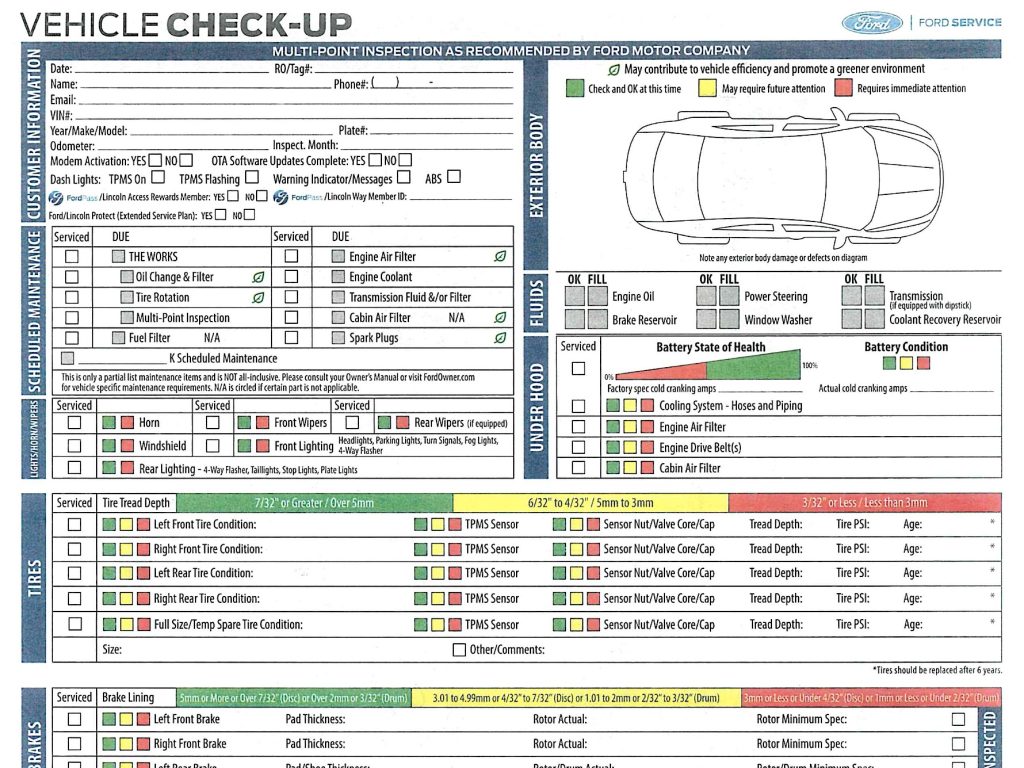
A Ford Multi-Point Inspection is a process our service department completes during vehicle service to inform customers of any current or upcoming vehicle needs. It determines your vehicle’s overall health–recognizing unknown problems, recommending repairs, and preparing for future maintenance.
What does White’s Canyon Ford include in a Ford Multi-Point Inspection?
During a Ford Multi-Point Inspection, our certified technicians cover several maintenance areas:
- Lighting: this includes all front and rear lighting (headlights, parking lights, turn signals, fog lights, four-way flasher, tail lights, stop lights, and plate lights); to ensure they are without damage and working correctly.
- Windshield: we will check your windshield for any cracks or chips and the condition of your front and rear wipers.
- Tires: the air pressure, tread depth, and condition on all four tires (plus the spare, if applicable).
- Brakes: we inspect your brakes for wear, including brake/shoe pads, rotors/drums, and brake lines/hoses.
- Undercarriage: we will look at your suspension, shocks, struts, steering linkage, exhaust system, and drivetrain (transmission, differential, axles, wheels).
- Underhood: this includes your battery condition, heating and cooling system (hoses and piping), drive belts, engine air filter, and cabin air filter.
- Exterior Body: our technicians will note any exterior damage before the appointment; dents, dings, etc.
- Fluids: we will check your engine oil, power steering, transmission, brake reservoir, window washer, and coolant recovery reservoir; fluid levels are checked and topped off if needed.
- Horn: beep, beep! Horns are important for driving safety.
What are the benefits?
Multi-point inspections can prevent expensive repairs by identifying problems early on. Moreover, issues can often go unnoticed. Our trained technicians will help you stay on top of your vehicle’s health, ensuring your vehicle is safe to drive.
How often should I get a Ford multi-point inspection?
Regardless of your vehicle’s age, multi-point inspections are vital. Therefore, at White’s Canyon Ford, our technicians perform a multi-point inspection at every service appointment. Following the service, we will provide a vehicle check-up sheet. Your advisor will discuss your vehicle’s health and answer any questions you may have.
How much does the inspection cost?
Nothing! We perform Ford’s multi-point inspections at no cost to you. Repairs may be recommended but are not included in the inspection.
Trust assured, you and your vehicle are in good hands at White’s Canyon Ford. Our friendly and knowledgeable service department is ready to help keep your trusty Ford on the road for years to come. Schedule your service today!
Recalls: Explained
Recalls. We’ve all been there before. You receive a letter stating a part of your vehicle has been recalled and begin to panic. You think to yourself, “A recall? What’s that? Is my car going to leave me stranded? Who is going to pay for this?” However, there’s no need to fret. Most of the time, recalls are not as challenging as they seem. This blog will help answer some common questions you may have.
What are recalls?
When your manufacturer or the National Highway Traffic Safety Association (NHTSA) determines that “a vehicle, equipment, car seat, or tire creates an unreasonable safety risk or fails to meet minimum safety standards,” they issue a recall. The NHTSA is responsible for enforcing vehicle performance standards to reduce the negative impacts of motor vehicle crashes.
Recalls are extremely common. To put it into perspective, Sara Coleman at Bankrate found the NHTSA issued over 1,000 safety recalls in 2021, ultimately pertaining to over 35 million vehicles. Recalls correct various faults ranging from minor technical problems to potential fire hazards. Once the NHTSA issues a recall, it is up to the manufacturers to “fix the problem by repairing it, replacing it, offering a refund, or in rare cases repurchasing the vehicle.” Your manufacturer will notify you of a recall via mail, offering an appropriate remedy. Ford Motor Company is required by law to mail recall letters to the last known registered vehicle owner (therefore, it is impossible to remove yourself from a recall mailing list). After receiving notice of a recall, your local dealership will fix said part for free.
Who pays for it?
The manufacturer is responsible for repairing any safety defects, free of charge to you. If someone tries to charge you for a recall repair, please report it to the manufacturer or NHTSA. There are instances where manufacturers are not obligated to fix specific safety issues, say on vehicles over ten years old or with 150,000 or more miles. However, select recalls, such as those for airbags, typically have no cut-off for manufacturer responsibility. Ultimately, we recommend discussing the recall with your local dealership to understand the specifications.
Can I still drive my vehicle if I have a recall?
It depends on the recall. Your manufacturer will let you know whether your vehicle is operable or, in serious cases, needs immediate attention. Nonetheless, you should always take a recall seriously, regardless of severity.
Does my vehicle have a recall?
If you have any questions regarding a recall on your Ford or Lincoln, please call us, and we will run your VIN. You can also check online by clicking here. It’s important to know of recalls applying to your vehicle. An existing problem may be an easy fix if there’s a recall you were unaware of. In the event you’ve previously had a repair completed that later turns into an issued recall, you may be reimbursed for it.
Here at White’s Canyon Ford, our service department runs the VIN on every vehicle that comes through the shop to check for existing recalls. This allows us the ability to update our customers on outstanding recalls or warranty extensions. We find it builds trust with our customers and verifies that your vehicle is up-to-date and safe for use. As always, we are here to help. Please reach out to us if you have any further questions!
Vehicle Service Contracts?
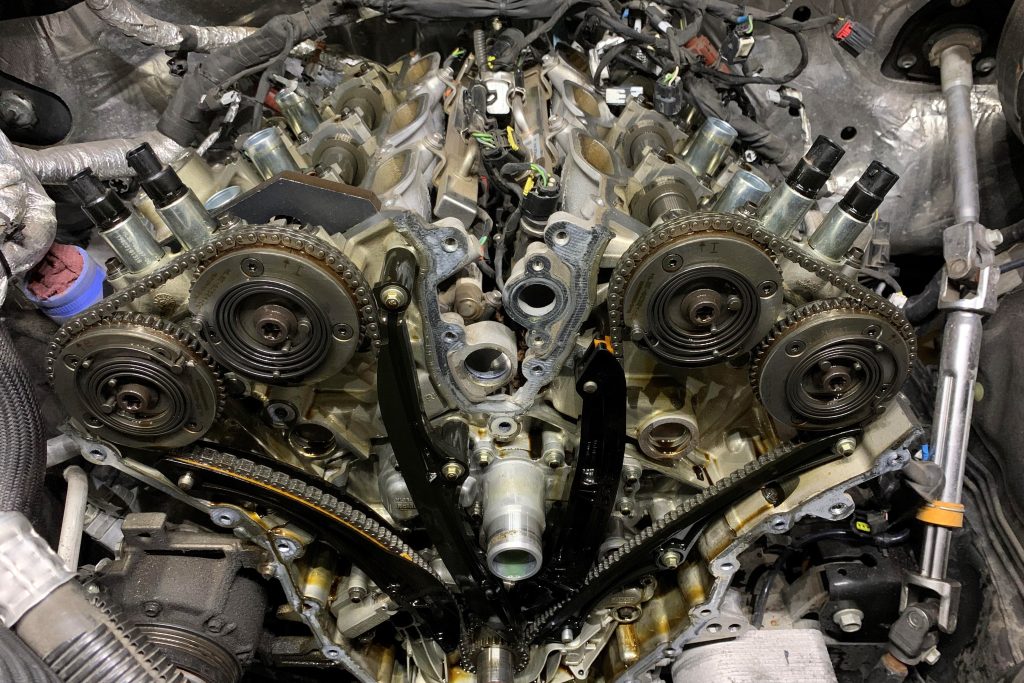
Many published articles advise against vehicle service contracts. However, after experiencing the car business for as long as we have, we’ve learned that they are highly beneficial for most customers. Could YOU benefit from a service contract? Keep reading to learn more.
What is a Vehicle Service Contract?
A vehicle service contract is essentially an agreement between a customer and the service contract company that the company will cover the cost of select repairs. Similar to car insurance, which helps cover repair costs after an accident, a vehicle service contract helps cover repair costs after a breakdown. You can pay a deductible rather than trying to tackle a bill of hundreds or even thousands of dollars.
How Does it Work?
You can pay the contract monthly by adding it to your car loan or as a lump sum upfront. There is a wide variety of contract options, from comprehensive to basic engine transmission coverage. When you speak with your service advisor before your appointment, give them your information. A factory-trained technician will diagnose the issue(s) on your vehicle. Your service advisor contacts your plan administrator, who approves or denies the claim. If approved, the technician fixes the repairs, and the administrator submits the payment. All you will have to do is pay your deductible!
In the event you trade your vehicle before the contract is up, most service contracts are cancellable and will give you a prorated amount of money back.
Why You Should Invest in a Vehicle Service Contract
Breakdowns are unexpected, expensive, and can happen to anyone. With most shops in the region charging a minimum shop rate of $110 per hour, it’s easy to rack up a hefty shop bill. Anyone who owns a newer car is likely aware that high-tech components alone are expensive to replace. Though we suggest everyone invests in a service contract, there are situations where we highly recommend it:
- A contract will keep you covered if you purchase a vehicle where the warranty has already expired or if you plan to keep your vehicle for a few years.
- For those who are budget conscious, a sudden repair bill can be stressful. Without an emergency fund, it may pose quite a financial burden. A vehicle service contract eliminates this risk.
- If you’re a high-mileage driver, you risk driving out of your original manufacturer’s warranty sooner than you’d like. A long-term, high-mileage coverage plan may be best for you. Most service contracts also include trip interruption perks, such as lodging, car rental, and roadside assistance.
Protect Your Investment
Your vehicle is a serious investment. Keep it protected! Regardless of how new or reliable your vehicle may be, mechanical issues are bound to arise. Consider a vehicle service contract if you’re looking for comfort in knowing you will be covered.
Still have questions? Stop by or give us a call! Our helpful and knowledgeable finance team is here for you.
Towing to the Black Hills
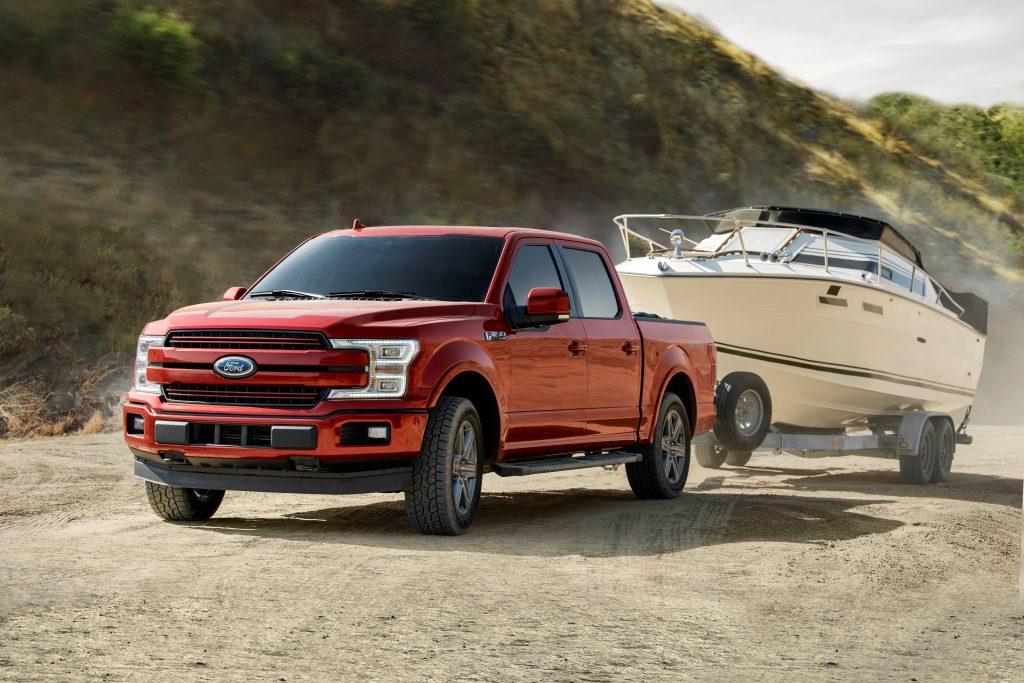
Who’s ready for a road trip? The Black Hills is a popular destination in the summer for families and outdoor enthusiasts alike. There are plenty of activities to do while being surrounded by beautiful views. With numerous lakes and camping spots to choose from, you’re likely to tow something along, such as your boat or camper. Here are a few towing tips to help you prepare for your trip:
Towing Preparedness
First, get plenty of rest the night before your departure, and pack some water and snacks. You want to be alert and energized for the miles ahead. If you choose to tow, prepare your vehicle ahead of time. Towing is a serious job – improperly hauling heavy loads will increase the risk of accidents for you and your fellow drivers. Check the pressure in all of your tires. Insufficient pressure could lead to a blowout. Have your vehicle maintained before you leave. Heavy loads can cause a lot of stress on your vehicle, leading to faster wear on parts. Ensure all your lights are working after wiring up, and adjust your mirrors so you can see adequately behind you. Finally, double-check your hitch ball and trailer coupler. They should fit properly to prevent your load from coming unattached while driving. If everything is secured, you’re good to go.
On the Road
Make sure you’re comfortable towing if you haven’t before. Practice makes perfect and will help with safety and navigation. Also, remember that your stopping and acceleration will change due to the extra weight. You won’t be able to start or stop as quickly as a lone vehicle. Equip your vehicle with a trailer brake if it doesn’t already have one, and confirm that it is on the correct settings. Trailer brakes will help you maintain control and provide support when stopping by alleviating weight from the tow vehicle. Being the braking is evenly distributed, you will have a smoother stop and less wear on your vehicle’s brake system. Give extra space when stopping so you don’t plow into the car ahead of you. Do not slam or ride on your brakes, as this could overheat them. Drive at a safe speed and stay in the right lane if possible, which will give you easy access to the shoulder in case something goes wrong.
Your Dealer Away From Home
White’s Canyon Ford is here for you. If you need vehicle maintenance during your trip, our service department is ready to help. For locals looking to travel outside of the Black Hills, our trained professionals will ensure your vehicle is in optimal shape for the drive.
Need help getting set up for towing? White’s Canyon Xtreme Truck Shop has access to a wide variety of trusted aftermarket brands such as B&W, Curt, and AirLift. Whether you need a hitch, trailer brakes, airbags, or anything in between, our accessories department can assist you in finding the right equipment for your vehicle. They will see that everything works properly and you’re ready to tow.
Looking to upgrade to an SUV or pickup truck that can handle the weight of whatever you’re towing? We have a wide variety of new and used vehicles ready to hit the pavement.
Welcome to the Black Hills
The Black Hills has many things to offer between sightseeing, outdoor activities, and places to eat or stay. There’s something for everyone! For a guide to everything South Dakota has to offer, head over to the Travel South Dakota website. If you find yourself in Spearfish, feel free to stop and say hello! Wherever the road takes you this summer, trust that White’s Canyon Ford will be alongside you every step of the way.
How to Maximize Your Fuel Mileage
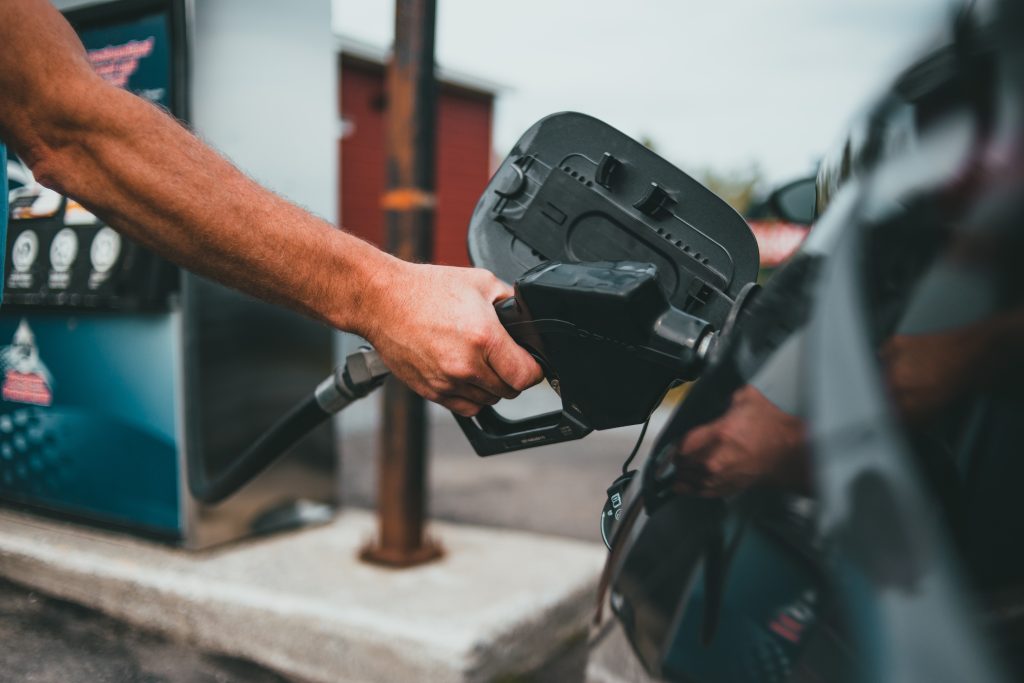
As summer quickly approaches, many of you likely have vacations planned and are ready to hit the road. Unfortunately, the current gas prices may cause some undesired stress. White’s Canyon Ford wants to help save your wallet and maximize your fuel mileage. Here are a few tips to consider:
Driving Habits
Aggressive driving can easily waste fuel. According to an article published on www.fueleconomy.gov, rapid acceleration and hard braking “can lower your gas mileage by roughly 15% to 30% at highway speeds and 10% to 40% in stop-and-go traffic.” Watching your speed can also help, as fuel economy typically declines after 50 mph. In optimal driving weather, consider using cruise control. The less your speed fluctuates, the better. Remove any unneeded cargo, especially in smaller vehicles, as extra weight may hurt your MPG. Additionally, rooftop luggage can increase aerodynamic drag, further reducing your fuel mileage.
Avoid idling when possible, which can potentially use a quarter to half-gallon of fuel per hour. Try to park in the shade whenever you can to prevent extra use of your air conditioning system, which can also eat up gas. Finally, plan accordingly. Make the most of your trips by combining errands to avoid driving more than you need to.
Routine Maintenance
Routine maintenance is recommended for ideal vehicle performance. Keep an eye on your fuel economy because significant changes in mileage may suggest your vehicle needs to be serviced. Our prime suggestion is a fuel system service, which will help restore power and fuel efficiency. This service cleans your fuel injectors, throttle body, and intake plenum, removing carbon buildup on valves, ports, piston crowns, combustion chambers, and any deposits obstructing the catalytic converter. We recommend performing a fuel system service every 30,000 miles, in conjunction with replacing spark plugs around every 60,000 miles.
Additionally, regularly check your tires for proper inflation. Insufficient pressure can cause premature wear, ultimately leading to poorer gas mileage or a potential blowout.
Fuel Choice Matters
Opting for the cheapest gas at the pump doesn’t always mean you’ll be saving money in the long run. Pay attention to what grade is recommended for your vehicle, as this will help your engine run as efficiently as possible. Though typically more expensive, premium gasoline has a higher octane rating, which helps prevent excess fuel from burning and maximizes power in certain engines.
White’s Canyon Ford is Ready to Help
Our friendly and experienced staff at White’s Canyon Ford is here to help and answer all of your questions. Do you think your vehicle might be in need of a tune-up? Get in touch with our service department! They will make sure your vehicle is road trip-ready. Are you looking to trade in your gas guzzler for a more efficient vehicle? Give our team of sales professionals a call! There is a wide variety of new and pre-owned vehicles in our inventory for any price range.
We wish you safe travels this summer and look forward to serving you!
Connect with us


- June 2026
- May 2026
- March 2026
- February 2026
- December 2025
- November 2025
- September 2025
- July 2025
- June 2025
- May 2025
- April 2025
- March 2025
- February 2025
- January 2025
- December 2024
- November 2024
- October 2024
- September 2024
- June 2024
- January 2024
- September 2023
- February 2023
- November 2022
- September 2022
- July 2022
- May 2022
- April 2022
- February 2022
- January 2022
- November 2021
- October 2021